Data, AI & The Talent Gap No One is Talking About
WOW was founded in 2017 on a simple premise: that recruitment had lost its personal touch. Nine years on, the business is bringing that same philosophy to one of the most consequential, and most transactional, corners of hiring: technology and data.
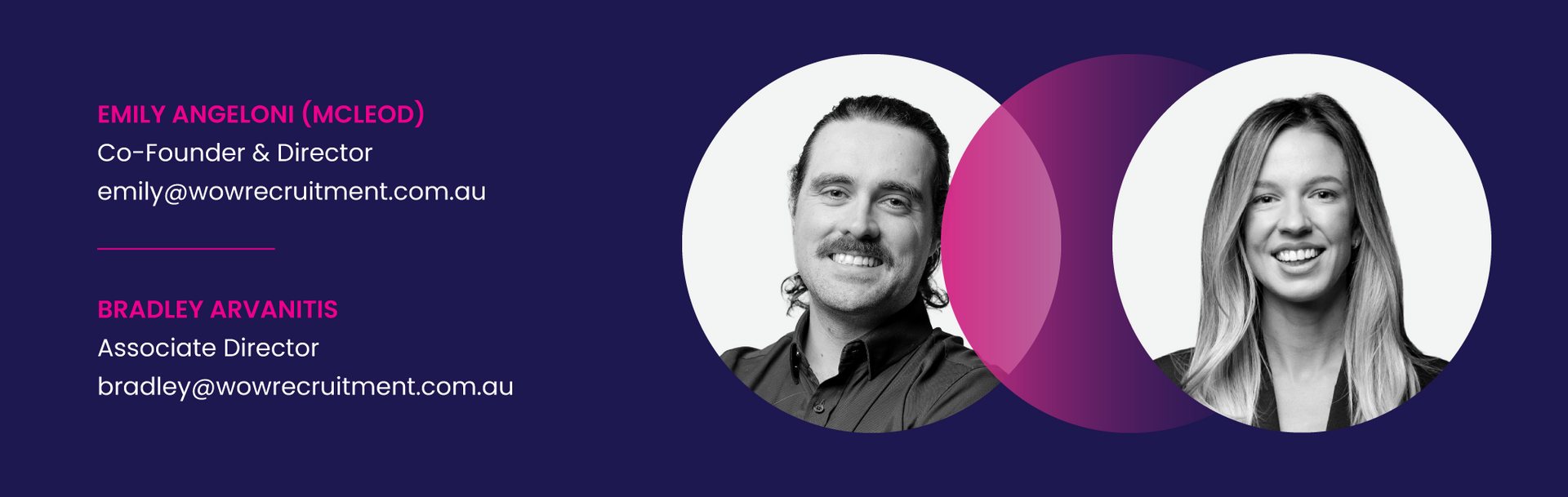
I sat down with Emily Angeloni, Co-Founder & Director, and Bradley Arvanitis, Associate Director, to talk about why WOW is launching its new Tech & Data division now, in a market that's more cautious than confident. We covered what's actually broken in tech hiring today, where the real demand is sitting across Data & AI, Software & Product Engineering, Cloud/DevOps & Security, and Transformation & Delivery, and what technology leaders should be doing differently if their hiring feels stuck. What came through most was a conviction that speed and volume have taken tech recruitment about as far as they can and that the businesses who win from here will be the ones who slow down enough to get it right.
1. What made this the right moment to bring the human-centred approach WOW Recruitment is known for into technology and data?
Emily Angeloni, Co-Founder & Director:
"When we started WOW, the problem we were solving for wasn't really about recruitment at all, it was about relationships. Too much of the industry had become transactional and we wanted to build something that put genuine connection back at the heart of how people find roles and how businesses find talent.
Technology is where that gap is most obvious right now. It's evolved from being a support function to now being at the core of how organisations operate, compete and grow. But a lot of tech hiring is still being done the old way: rigid, one-size-fits-all interview processes that don't flex for the seniority of the role, the skills actually being assessed or how fast those skills are changing.
Nine years in, we've got the maturity, the networks and the runway to do this properly rather than rushing it. For us, this wasn’t about chasing a trend but instead waiting until we could bring the same depth of relationship-building we're known for in other sectors into tech, and do it right."
2. Emily mentioned the industry "too often dominated by automated volume and transactional keyword matching." Brad, what were you seeing in the tech recruitment space that told you this gap needed filling?
Bradley Arvanitis, Associate Director:
"What I was seeing, both from candidates and from clients, was frustration with being treated as a data point. Candidates were going through processes where nobody seemed to actually understand their experience beyond a list of tools and acronyms on a CV. And on the client side, hiring managers were getting flooded with volume but not necessarily the right calibre or fit for their team.
That's the gap. Technology hiring has become so focused on speed and scale that the human side – deeply understanding the problem a business is trying to solve or what a candidate is genuinely looking for in their next move – has fallen away.
We're not trying to out-automate anyone. We're doing the opposite: slowing down enough to actually understand the brief, the team dynamics, the culture and matching for all of that."
3. We’re launching into a softer hiring market – a contrary move on paper. What's the thinking that others might be missing?
Emily Angeloni, Co-Founder & Director:
"On the surface, launching a new division when hiring conditions are more cautious looks like the wrong call. But what people are missing is the difference between hiring volume and hiring importance. Yes, the market is more deliberate right now – businesses are thinking harder before they pull the trigger on a role. But that's exactly why the calibre of who they bring in matters more.
When budgets are tighter, there's no room for a mis-hire. Every technology and data role has to earn its place on the team. That's a market that rewards thoroughness over volume, which is exactly what WOW is built for. If we'd waited for the market to loosen up again, we'd have been entering at the same time as everyone else, competing with transactional terms we're trying to move away from. Launching now means we're building the relationships and the track record before the next upswing."
4. Beyond the obvious budget pressures, what's the real challenge technology leaders are grappling with when it comes to hiring right now?
Bradley Arvanitis, Associate Director:
"The budget conversation gets all the attention, but the harder problem I'm seeing is capability risk. Technology leaders are being asked to do more with leaner teams – to deliver transformation, manage security and compliance, and keep pace with AI adoption – without necessarily having the headcount to match the ambition.
That means every hire has to be someone who can genuinely lift the team's capability, not just fill a seat. There's very little appetite for hiring someone who needs eighteen months to become productive. Leaders want people who can walk in and make an immediate, measurable difference. That's a much harder brief to fill than it sounds, and it's why a lot of leaders are finding the market frustrating because they know exactly what they need, but the right person is genuinely hard to find and even harder to assess for at pace."
5. Across your four verticals – Data & AI, Software & Product Engineering, Cloud/DevOps & Security, and Transformation & Delivery – where is the demand most intense right now, and why?
Bradley Arvanitis, Associate Director:
"Data, AI & Intelligence is where we're seeing the most consistent pull at the moment. Every organisation we talk to is trying to work out how to actually operationalise AI (not just talk about it) and that means they need people who can build and govern the data
foundations and AI agents underneath it. There's a real shortage of people who can do that well.
Cloud, DevOps & Security isn't far behind. Security in particular has shifted from being a specialist concern to a board-level priority, so we're seeing more organisations invest there even while they're cautious elsewhere.
Software & Product Engineering and Transformation & Delivery are steadier, still strong, but tied more to specific projects and growth phases rather than the broad-based urgency we're seeing in data and security."
6. If you had to bet on one part of the technology market that's about to take off, where would you put your money?
Emily Angeloni, Co-Founder & Director:
"I'd put it on the organisations that figure out how to combine AI capability with genuinely strong data foundations. There's been a lot of excitement about AI tools themselves, but the businesses that are going to pull ahead are the ones investing in the people who can make their data trustworthy, accessible and well-governed enough for AI to actually work on top of it.
I know that’s not a flashy answer, but it's where I think the real growth sits over the next couple of years. Not in the tools themselves but in the talent that makes those tools genuinely useful rather than a science experiment."
7. The Tech & Data division is focused on scale-ups and mid-market organisations in sectors like SaaS, FinTech and HealthTech. Why this segment, and what are larger enterprises or recruiters missing about it?
Emily Angeloni, Co-Founder & Director:
"Scale-ups and mid-market businesses are operating in a really specific window right now – they've outgrown the scrappy, anyone-will-do hiring of the early days, but they don't have the brand recognition or internal recruitment infrastructure of a large enterprise. That puts them at a real disadvantage when they're competing for the same talent.
What gets missed is that these businesses often need recruitment partners more than the big players do. They need someone who can sell not just the role but the opportunity – the growth trajectory, the impact and value a person can create, the culture. That's a much more consultative sell than a lot of agencies are set up to do and it's exactly where our model fits. We understand the human story behind why someone would leave a stable, established company to join a business that's still proving itself."
8. Where do you want this division to be in two years - and what would success actually look like?
Emily Angeloni, Co-Founder & Director:
"Success in two years looks like being the first call for technology leaders in our target sectors, not just an option among many. We'd want to have built a genuine reputation across all four verticals, with deep enough networks that we're often the ones flagging exceptional talent before a client even realises they need it.
We're also conscious that we started in Sydney with national reach into Melbourne and Brisbane. In two years, I'd want that national footprint to feel just as established as our presence in our home market so wherever our clients are growing, we're already there with them."
9. If a technology leader reading this is hiring right now and feeling stuck, what's the one thing they should do differently?
Bradley Arvanitis, Associate Director:
"Stop optimising for speed and start optimising for fit. When leaders feel stuck, the instinct is often to widen the net, lower the bar slightly or move faster to fill the gap. In my experience, that almost always costs more time in the long run than it saves.
The leaders who get unstuck fastest are the ones who get really specific about what success in the role actually looks like six months in. By that, I don’t just mean the skills list but the outcomes and holding out for that. A sharper brief, even if it takes a little longer to fill, beats a fast hire that doesn't work out."
Thanks to Emily and Bradley for the candid conversation. What comes through clearly is that WOW isn't trying to win on speed or volume. Instead, it's betting on depth, genuine understanding and getting the fit right the first time. For technology leaders navigating a market where every hire has to earn its place, that's exactly the kind of partner worth having in your corner.
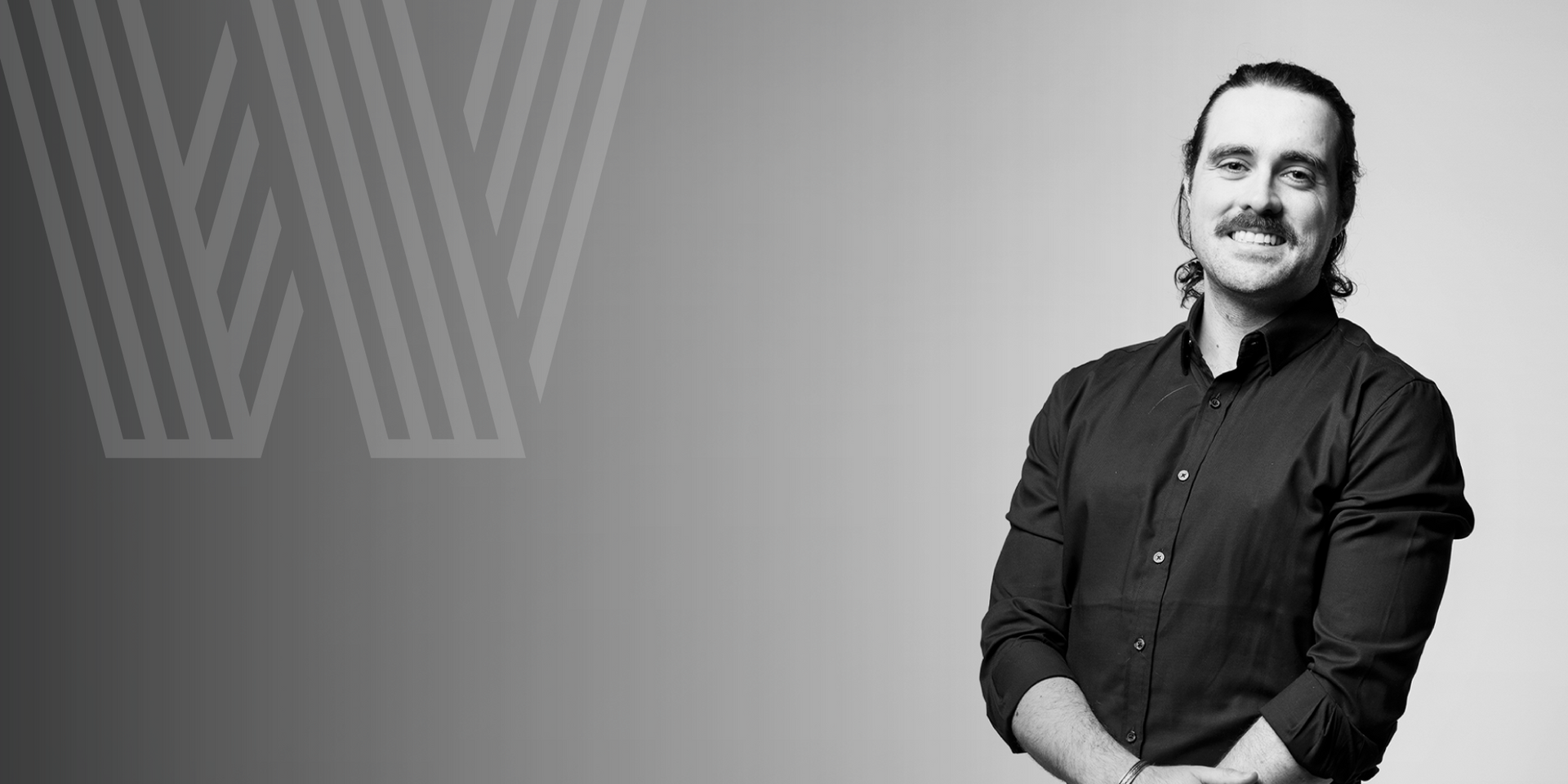
If you're hiring into technology or data teams and want a recruitment partner who takes the time to understand the brief, not just fill it, get in touch with Bradley Arvanitis to start the conversation.
Bradley Arvanitis
0413 934 782
bradley@wowrecruitment.com.au